Motomami Was an Argument, Not Just an Album
Rosalía's Motomami (Sony Music, 2022) positioned flamenco's bulerías rhythm against dembow and batería — a structural argument about where the forms belong. This piece traces the Grammy win (Latin Grammy, Best Fusion/Urban Interpretation, 2022) and what El Mal Querer (2018) had already proposed.
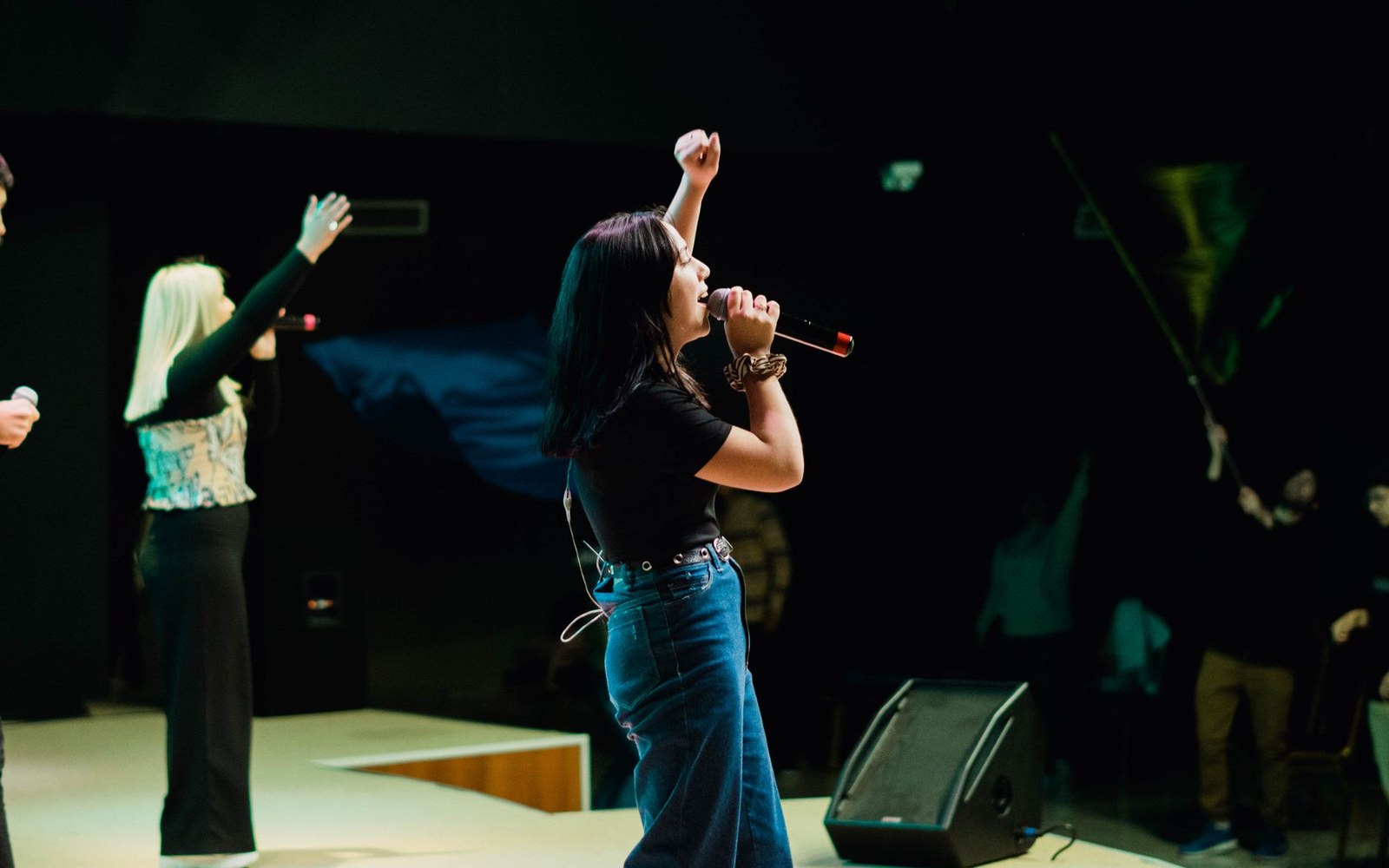
Latin Grammy, Album of the Year — 23rd Latin Grammy Awards, 2022
Photo: Elias Jara / Pexels
A festival bill is where a chart position turns into a fee.
Photo: Bence Szemerey / PexelsRosalía's second and third records didn't blend flamenco and urbano politely — they made a structural case that the forms had always been available to each other.
What El Mal Querer Proposed First
Before Motomami entered the conversation, El Mal Querer (Sony Music, 2018) had already done something that the Spanish music industry wasn't quite ready to categorize. The album drew its narrative architecture from a thirteenth-century Occitan novel, Flamenca, and built its sonic spine from bulerías — one of flamenco's fastest and most rhythmically complex palos, running on a twelve-beat compás (the rhythmic cycle governing where accents, handclaps and footwork fall) that leaves almost no room for carelessness. Rosalía placed that compás against sparse electronic production, treating the metric grid not as decoration but as the load-bearing structure of each track.
The Latin Recording Academy responded in kind: El Mal Querer won Best Fusion/Urban Interpretation and Best Contemporary Fusion Album at the 2018 Latin Grammys, and the Spanish industry's own Premios de la Música followed. More substantively, flamenco scholarship had to decide what to do with it. Flamenco had been inscribed on UNESCO's Intangible Cultural Heritage list in 2010, a recognition that carried the implicit anxiety of preservation — and here was a twenty-five-year-old Catalan singer using its oldest structural materials in ways that Seville's traditionalists found provocative and that electronic music listeners found immediately legible. That double legibility was the argument.
A certification is a document before it is a decoration — each body counts units its own way.
Photo: cottonbro studio / PexelsWhat El Mal Querer proposed, at its core, was that bulerías and compás weren't museum objects. They were time-keeping systems, and time-keeping systems are exactly what production software manipulates. The gap between a flamenco percussionist marking a twelve-beat cycle and a producer programming a grid in Ableton is narrower than the cultural distance between the two worlds implies.
The Architecture of Motomami
Motomami (Sony Music, March 2022) extended the argument and complicated it. Where El Mal Querer was austere and conceptually unified, Motomami was deliberately fractured — sixteen tracks that moved between stripped flamenco guitar, dembow (the Jamaican riddim recorded by Steely & Clevie in 1990 that became reggaetón's foundational rhythmic pattern), batería (jazz drum kit, played live rather than programmed), and balladry that owed as much to bolero as to pop. The transitions were the point. Rosalía wasn't sequencing genres in separate rooms; she was placing them against each other in the same room and watching what happened to the walls.
"Bulerías" — the track, not just the form — appears late in the album and drops most of the electronic scaffolding, leaving voice, palmas (handclapping), and the compás almost bare. Its placement after tracks built on dembow and trap production retroactively reframes everything that came before: the electronic rhythms aren't borrowing from flamenco, the album suggests, so much as flamenco is showing that it always contained them. The twelve-beat cycle of bulerías, with its displaced accents at positions three, six, eight, ten and twelve, produces a syncopation profile not entirely unlike the dembow's offbeat kick — not identical, but structurally rhyming. Motomami made that rhyme audible.
What the album won
- Latin Grammy, Album of the Year — 23rd Latin Grammy Awards, 2022
- Latin Grammy, Best Fusion/Urban Interpretation — 23rd Latin Grammy Awards, 2022 (same category Rosalía won for El Mal Querer at the 19th, 2018)
- Grammy Award, Best Alternative Music Album — Recording Academy, February 2023
- Promusicae platinum certification — Spain
The production involved collaborators across three continents: El Guincho (Pablo Díaz-Reixa), who had worked with Rosalía since El Mal Querer, remained central, while the album drew in additional producers including Michael Uzowuru and contributions from Oneohtrix Point Never. That range registered in the sound's texture — the album doesn't maintain a single production aesthetic, and that instability is intentional. Genre coherence would have undermined the argument.
What the Awards Said, and What They Didn't
At the 24th Latin Grammy Awards in November 2023 — held in Seville, which carried its own symbolic freight given flamenco's Andalusian roots — Motomami had already accumulated its hardware. The album won Album of the Year at the Latin Grammys in 2022, along with Best Fusion/Urban Interpretation, repeating the category Rosalía had won for El Mal Querer and confirming the Academy's reading of her work as located precisely at the junction of those two traditions. It also won the Grammy Award for Best Alternative Music Album at the Recording Academy's ceremony in February 2023 — filed in the American system not as Latin music but as alternative, which said something about where Rosalía's work sits in English-language industry taxonomy versus Spanish-language industry taxonomy. The same album, filed differently depending on who is counting.
The Latin Recording Academy's Latin Grammy for Album of the Year carried particular weight because the category is voted on by the full Academy membership, not a genre-specific committee. Winning it placed Motomami in a short list of records considered most significant to the Spanish-language music industry in a given year — a list where reggaetón, regional Mexican, and Latin pop more conventionally compete. A record built around flamenco compás and experimental production clearing that field was not a routine outcome.
Forms in collision
- bulerías — fast flamenco palo in a 12-beat compás; the structural spine of both El Mal Querer and the track "Bulerías" on Motomami
- compás — the rhythmic cycle of a given flamenco palo; the load-bearing element Rosalía placed against electronic production
- dembow — Jamaican riddim (Steely & Clevie, 1990); foundational pattern of reggaetón; appears alongside flamenco materials on Motomami
- batería — live jazz drum kit used on Motomami; distinct from programmed percussion elsewhere on the record
- palmas — handclapping used in flamenco performance; audible in stripped form on the "Bulerías" track
What the awards didn't capture was the critical conversation the album forced in Spain specifically. Promusicae — Spain's music industry certification body — certified the album platinum domestically, but the more significant domestic response came from flamenco institutions and press, which had to decide whether Motomami was a contribution to the form or a departure from it. The distinction matters because the UNESCO inscription creates an implicit framework for authenticity that practitioners and critics invoke regularly. Rosalía's answer, implicit in the album's structure, was that the question itself was the wrong question: the palos are rhythmic and modal systems, not ethnic property, and they travel.
The Position in a Longer Argument
Motomami didn't arrive without precedent on its flamenco side. Camarón de la Isla and Paco de Lucía had spent the 1970s and 1980s expanding flamenco's sonic range — introducing electric bass, jazz harmony, and Cuban rhythms into a tradition that had treated those elements as foreign — and the purist reaction then was as sharp as anything Rosalía faced. The difference is that Rosalía's expansion moved outward toward electronic urbano production rather than toward jazz or Latin jazz, which updated the terms of the debate without changing its fundamental structure: which materials are available to the form, and who decides?
The urbano side of the argument had its own parallel history. Reggaetón's dembow rhythm — Jamaican in origin, routed through Panamanian underground and Puerto Rican underground before becoming a global commercial format — had itself crossed multiple genre borders before arriving at mainstream acceptability. By the time Motomami placed bulerías next to dembow, both forms had already survived significant gatekeeping. That shared history of contested legitimacy is part of why the combination worked: two rhythmic systems that had both been told they didn't belong in polite musical company, placed in proximity.
Rosalía has not released a follow-up album as of mid-2025, though she has collaborated extensively — with Rauw Alejandro, with Bad Bunny, with Billie Eilish — in the years since Motomami. Each collaboration has extended the network of forms the album mapped without resolving the argument it opened. That, perhaps, is the measure of what a structural argument in music actually achieves: not a settled answer, but a permanently altered set of available questions.