Most-Streamed Three Times, Still in Spanish
Bad Bunny held Spotify's most-streamed artist position in 2020, 2021 and 2022 — every time without a single English-language album. This piece examines what the Un Verano Sin Ti cycle (2022) did on the charts and what the Spotify year-end data, cited per Spotify's own Loud & Clear reports, says about the scale.
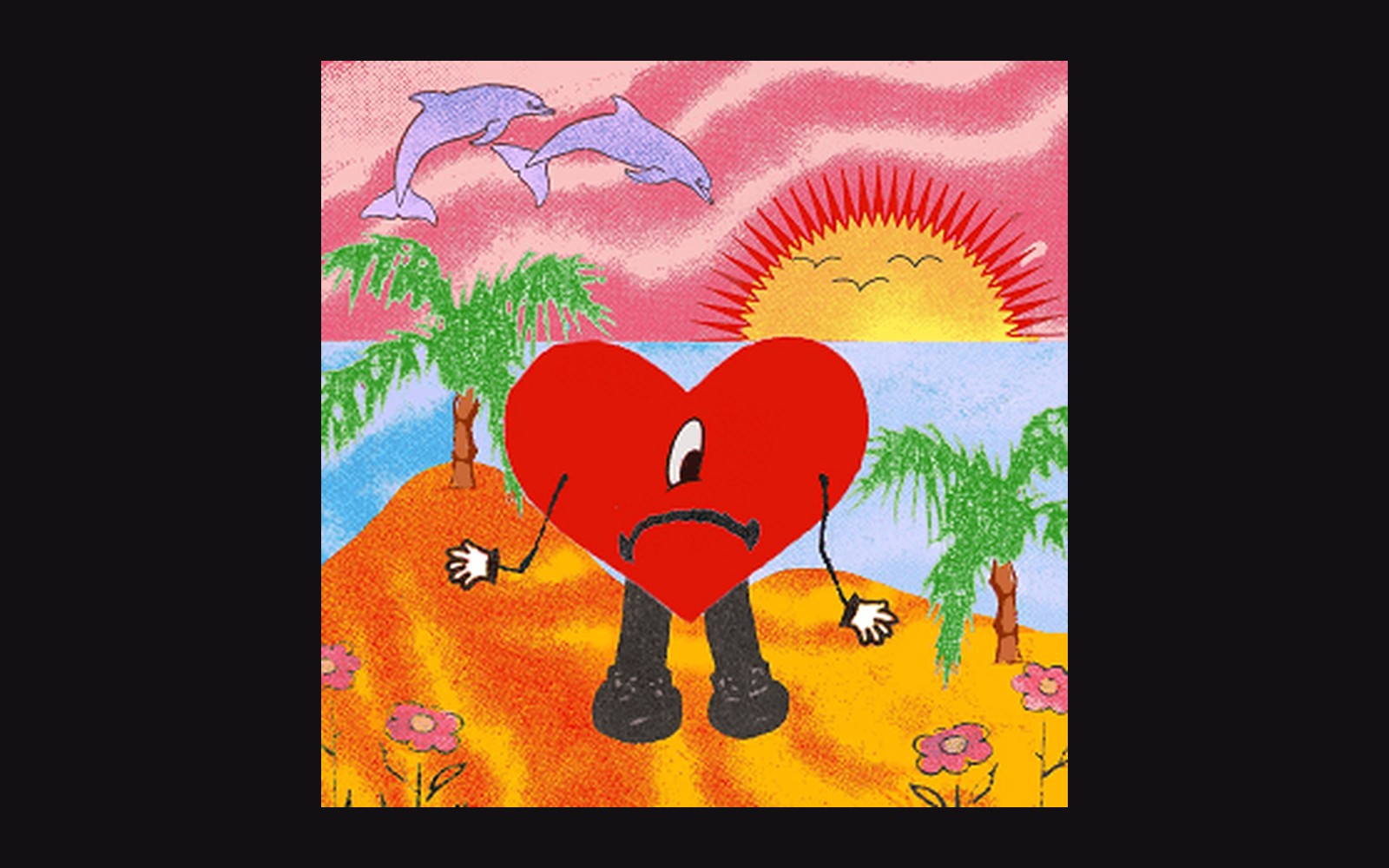
Three consecutive years as Spotify's most-streamed artist: 2020, 2021, 2022
Photo: Un Verano Sin Ti · Wikimedia CommonsThe number nobody had seen before, and then it happened again
Mix decisions are where a regional format becomes an exportable one.
Photo: Anna Pou / PexelsWhen Spotify published its year-end data for 2022, Bad Bunny became the platform's most-streamed artist for the third consecutive year — every one of those years without releasing a single English-language album. The run covered 2020, 2021 and 2022, a stretch during which the Puerto Rican artist born Benito Antonio Martínez Ocasio accumulated streaming figures that placed him above artists recording primarily or entirely in English. That had not happened before, and the structural conditions that made it possible are worth examining more carefully than the headline number alone.
The 2022 peak came on the back of Un Verano Sin Ti, released through Rimas Entertainment in May of that year. The album entered the Billboard 200 — the United States' primary album chart, ranked by equivalent album units combining streams, track sales and album sales — at number one, becoming the second entirely Spanish-language album to debut at that position, after his own El Último Tour del Mundo (2020). It held the chart for thirteen non-consecutive weeks across 2022, per Billboard, another figure without precedent for a Spanish-language project.
Un Verano Sin Ti ran to twenty-three tracks across roughly eighty-one minutes, moving between reggaetón, the dembow-driven urbano style that Puerto Rico exported globally, and cumbia, mambo, and música regional mexicana — the latter a deliberate pivot toward the Mexican fanbase that had been growing steadily through the preceding album cycles. The inclusion of Bomba Estéreo, Chencho Corleone and The Marías among its features reflected both the album's geographic ambition and Bad Bunny's willingness to treat his own genre loyalties as a palette rather than a fixed identity. No track on the record attempted English as a commercial or crossover concession.

A vocal take is the cheapest part of a record and the one everything else is built around.
Photo: Anna Pou / PexelsWhat the streaming numbers actually measure
Spotify's year-end rankings for most-streamed artists are generated by raw play count across the calendar year — a figure that aggregates every stream of every track attributed to that artist, including features, regardless of release date. This means a back catalogue matters as much as a new release, and it rewards artists with dense, widely-played archives as well as new material. Bad Bunny's 2020 ranking, in the year he released YHLQMDLG and El Último Tour del Mundo, reflected both the new records and a back catalogue that had been accumulating since his 2016 emergence on SoundCloud and through his signing to Rimas Entertainment in San Juan.
The Loud & Clear report, which Spotify publishes annually to disclose how streaming revenues distribute across its catalogue, does not name individual artist payouts, but it documents the number of artists crossing particular payout thresholds. The broader implication of Spotify's Loud & Clear methodology is that artists at the very top of the most-streamed ranking are generating royalty flows measured in tens of millions of dollars annually, calculated against Spotify's per-stream rates — which themselves vary by territory, deal structure and whether the stream is on a paid or free tier. The rates are not publicly itemised per artist; what is documented is the threshold data, and the most-streamed artist in any given year sits well above every disclosed bracket.
For 2022 specifically, Spotify reported that Bad Bunny accumulated over eighteen billion streams across the year, a figure the company released in its Wrapped summary. That number sits alongside the Billboard 200 data in illustrating the scale of Un Verano Sin Ti's cycle: the album was not only charting at the peak of the United States' most closely watched album chart, it was driving listening at a volume that outpaced every Anglophone competitor on the planet's largest audio streaming service.
Scale markers
- Three consecutive years as Spotify's most-streamed artist: 2020, 2021, 2022
- Over 18 billion streams in 2022 alone, per Spotify Wrapped
- Un Verano Sin Ti: 23 tracks, approximately 81 minutes, released May 2022
- First entirely Spanish-language album to debut at number one on the Billboard 200
- Thirteen non-consecutive weeks at number one on the Billboard 200 in 2022
- Latin Grammy Album of the Year, 23rd cycle (2022 releases)
The infrastructure that made this possible
None of this happened in a vacuum, and the industry conditions of 2022 are as important as the music. Rimas Entertainment, the San Juan-based independent label that handles Bad Bunny's releases, operates without the structural overhead of a major, licensing distribution rather than selling equity in its roster — a model that allowed the label to retain leverage as streaming revenues grew. Rimas had already demonstrated the viability of that approach through Bad Bunny's earlier records, and by 2022 was in a position to release a twenty-three-track Spanish-language album with no English crossover singles and watch it debut at number one in the United States.
The Latin music streaming audience had also grown significantly as a proportion of total Spotify usage. Billboard and Spotify's own category data consistently show that Latin music is one of the fastest-growing genres on the platform by streaming volume, driven by diaspora listeners in the United States, growth in Spain and Latin America, and genuine cross-demographic reach in markets that had historically underindexed for Spanish-language content. The infrastructure of Latin-language streaming — algorithmic playlist placement, Spotify's own editorial Latin playlists, and the weight of the Rimas promotional machine — produced chart performance that would have been structurally impossible a decade earlier, when streaming's Latin category was smaller and Latin acts were routinely encouraged by distributors to record English-language tracks to secure mainstream placement.
The Latin Grammy machinery played a supporting role. The Latin Recording Academy, which administers the awards from its Miami offices, had been steadily expanding its category scope through the late 2010s and early 2020s, and Bad Bunny's records had accumulated nominations and wins that fed back into Spotify's algorithmic recommendation systems through the attention those awards generate. The twenty-third Latin Grammy cycle, for releases from 2022, awarded Un Verano Sin Ti Album of the Year — a category in which the competition included Rosalía's Motomami, itself a work that had tested the boundaries of what a Spanish-language album could do with production and commercial reach.
What the three-year run from 2020 to 2022 demonstrates is less a story about Bad Bunny uniquely and more a story about structural change: a market that had treated English as the default language of mass streaming success had reached a point where a Puerto Rican artist recording entirely in Spanish could hold its top streaming position for three consecutive years. The certification bodies registered it — RIAA Latin certifications for multiple tracks from the album's cycle added to a tally that had been building since YHLQMDLG. The festival circuit registered it; the live economics registered it; the Billboard charts registered it in a way they had not registered anything Spanish-language before. The Spotify year-end figure was the most legible signal, but it was also the last piece of a picture that had been assembling across the entire prior decade of Latin urbano's global expansion.
How the ranking works
- Spotify most-streamed: raw annual play count, all tracks including features, any release year
- Loud & Clear: reports payout thresholds by artist tier, not individual payouts — top artist sits above every published bracket
- Streaming rates vary by territory, deal type, and paid vs. free tier