Camarón and Paco de Lucía Broke Flamenco and Rebuilt It
The 1969 collaboration between Camarón de la Isla (vocals) and Paco de Lucía (guitar) produced a series of records that moved flamenco out of the tablaos and into the concert hall. This piece focuses on La leyenda del tiempo (1979) as the record where the break with tradition became audible.
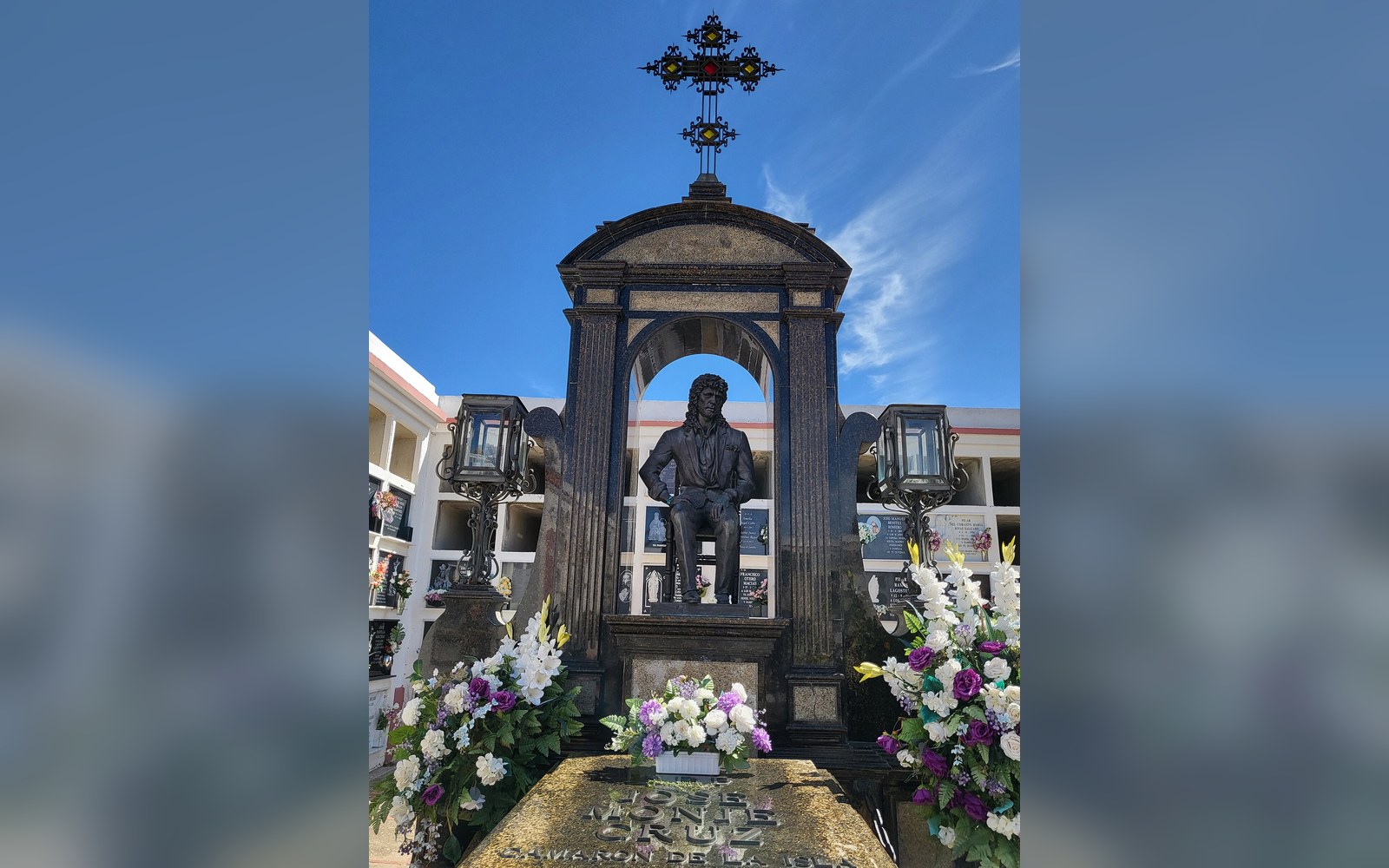
1969 — Camarón de la Isla and Paco de Lucía begin their studio partnership
Photo: Camarón de la Isla. tumba 0 · Wikimedia CommonsThe partnership that moved flamenco off the tablao floor and onto the world stage
Physical racks still decide what a catalogue looks like in the country that pressed it.
Photo: Zeynep M. / PexelsWhen Camarón de la Isla and Paco de Lucía began recording together in 1969, flamenco was still largely confined to the intimate, commercially compromised world of the tablaos — the restaurants and clubs where performers worked for tourist audiences, playing forms they knew would land. The records the two men made over the following decade pulled the music out of that circuit, not by abandoning what flamenco was but by treating its palos — the named rhythmic and modal forms such as soleá, bulerías and seguiriyas, each governed by its own compás — as a living architecture rather than a museum display.
Paco de Lucía was already remaking guitar technique: extending the picado runs, opening up the harmonic palette, borrowing discreetly from jazz and from other regional traditions. Camarón de la Isla — José Monje Cruz, from San Fernando in Cádiz province — carried the most celebrated throat in a generation, a voice that could hold a seguiriyas in the old Gypsy manner and then bend it somewhere no one had quite mapped. Together they made nine studio albums between 1969 and 1977, records that sold seriously by flamenco standards and built a concert audience that expected more than tablao repertoire.
La leyenda del tiempo and the audible break
The break, when it became undeniable, came with La leyenda del tiempo in 1979 — and it was Camarón's record, not a joint project. Paco de Lucía had moved toward his own direction; on this album, Camarón worked with younger musicians including Ricardo Pachón as producer and Kiko Veneno and Raimundo Amador from the rock and blues margins of Seville's scene. The instrumentation arrived with electric bass, sitar and synthesiser alongside the flamenco guitar. The palos were still present — the structures underneath remained bulerías, soleá — but the production placed them inside a different sonic world.
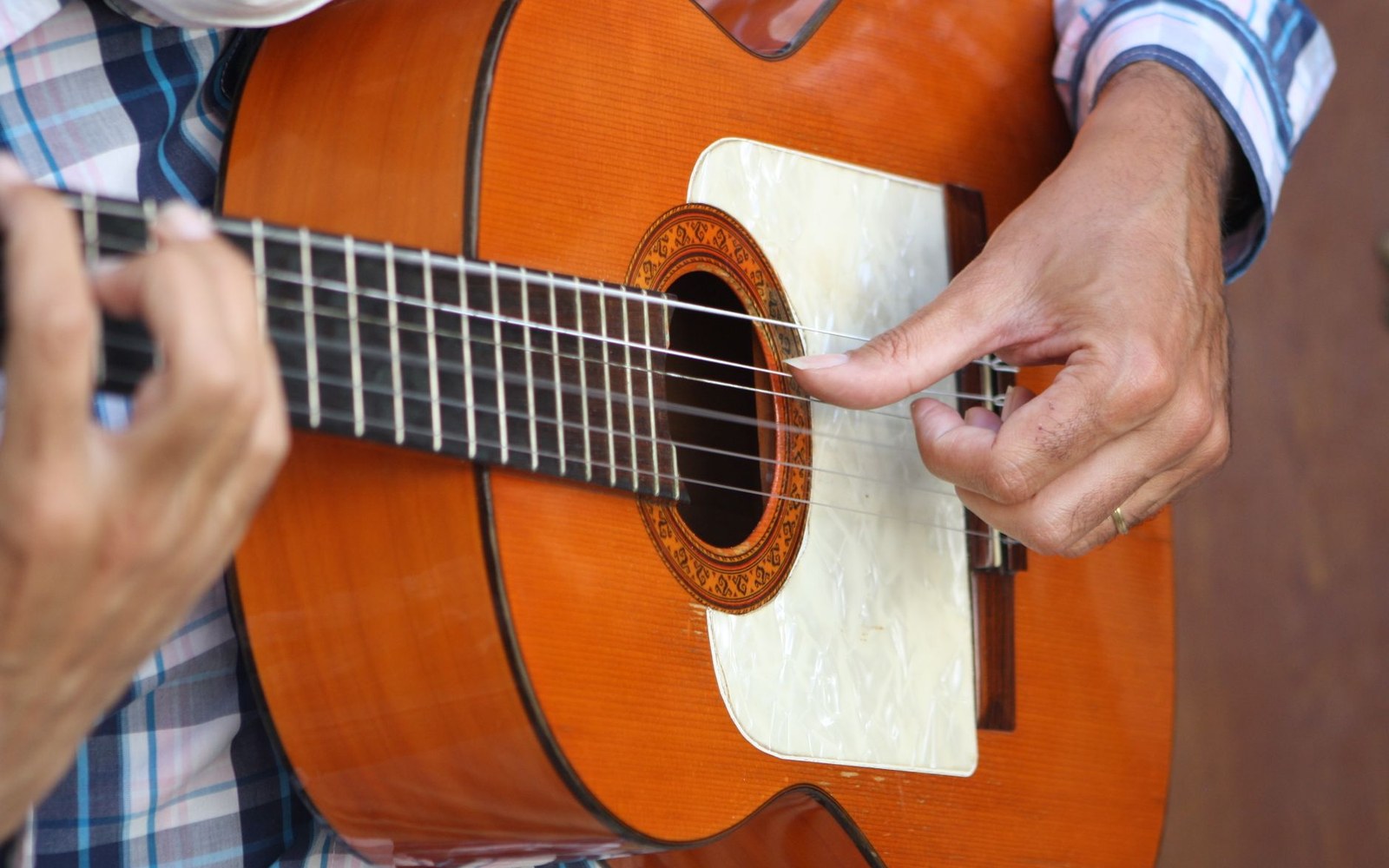
The rasgueado is a rhythm technique before it is a chord — the hand keeps the compás.
Photo: Elena / PexelsThe record was widely received with incomprehension on release, returned by shops and largely ignored by flamenco's gatekeepers. What happened afterward is the more interesting history: by the mid-1980s, the same record had become the reference point for every subsequent attempt to position flamenco inside a contemporary production context. It is the precedent that would matter decades later when artists reached for the tradition and asked what it could bear.
The structures underneath La leyenda del tiempo still held. A bulerías remains a bulerías regardless of what the bass guitar is doing: the 12-beat compás still governs where the accent falls, where the voice has room, where the phrase resolves. That is what Camarón and Pachón understood — that tradition is a grid, and the question is what you build on it. The gatekeepers who rejected the album in 1979 had confused the grid with the furniture.
What it changed
Flamenco's inscription on UNESCO's Intangible Cultural Heritage list in 2010 came more than thirty years after La leyenda del tiempo, and the distance is instructive: the institutional recognition arrived long after the music had already survived its own rupture. The partnership between Camarón and Paco de Lucía had established, in practice, that flamenco could absorb external influence and remain identifiably itself — that the compás and the deep modal seriousness of the forms were durable enough to carry experimentation.
Chronology
- 1969 — Camarón de la Isla and Paco de Lucía begin their studio partnership
- 1969–1977 — Nine studio albums recorded together; flamenco concert audience expands
- 1979 — La leyenda del tiempo released; returned by shops, rejected by flamenco establishment on release
- Mid-1980s — Record retrospectively recognised as a turning point
- 1992 — Camarón de la Isla dies, aged 41
- 2010 — Flamenco inscribed on UNESCO's Intangible Cultural Heritage list
Paco de Lucía went on to collaborations with jazz musicians, to the guitar trio he formed with Al Di Meola and John McLaughlin, to concert recordings that placed flamenco guitar in the same conversation as classical and jazz performance. Camarón de la Isla died in 1992, still in his forties, with a reputation that had only grown after the initial rejection of La leyenda del tiempo. By then the concert hall had long since replaced the tablao as the site where flamenco's reputation was built and contested.
The artists who came later — those who would place bulerías rhythm against contemporary production in the twenty-first century — were working in a space that Camarón and Paco de Lucía had cleared. The 1979 rupture made subsequent ruptures legible.
Key terms
- palos — the named rhythmic and modal forms of flamenco; each has its own compás
- compás — the rhythmic cycle governing accents, voice entry and phrase resolution in each palo
- bulerías — a fast flamenco palo in 12-beat compás; one of the forms present beneath the experimental production of La leyenda del tiempo
- tablao — a club or restaurant venue where flamenco performers worked for paying, often tourist, audiences