Nueva Canción Before It Became a Category
The nueva canción movement — Víctor Jara in Chile, Silvio Rodríguez in Cuba, Mercedes Sosa in Argentina — used acoustic forms to carry political weight from the late 1960s onward. A history piece naming the key recordings and the documented political contexts that shaped and then silenced the movement.
1965 — Peña de los Parra opens in Santiago; Mercedes Sosa performs at Festival de Cosquín
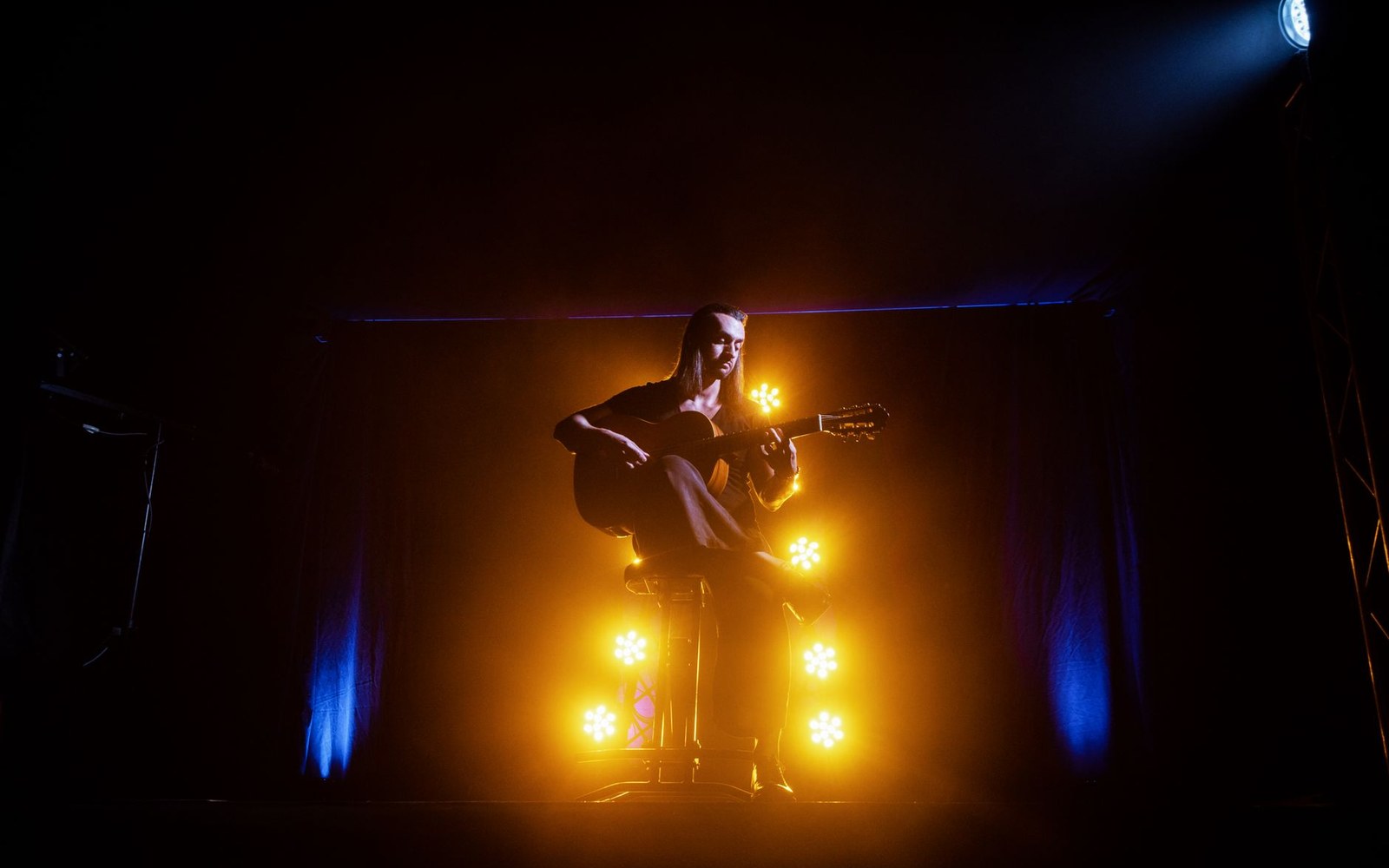
Photo: Alena Darmel / PexelsA guitar, a lyric, and enough political threat to get them banned
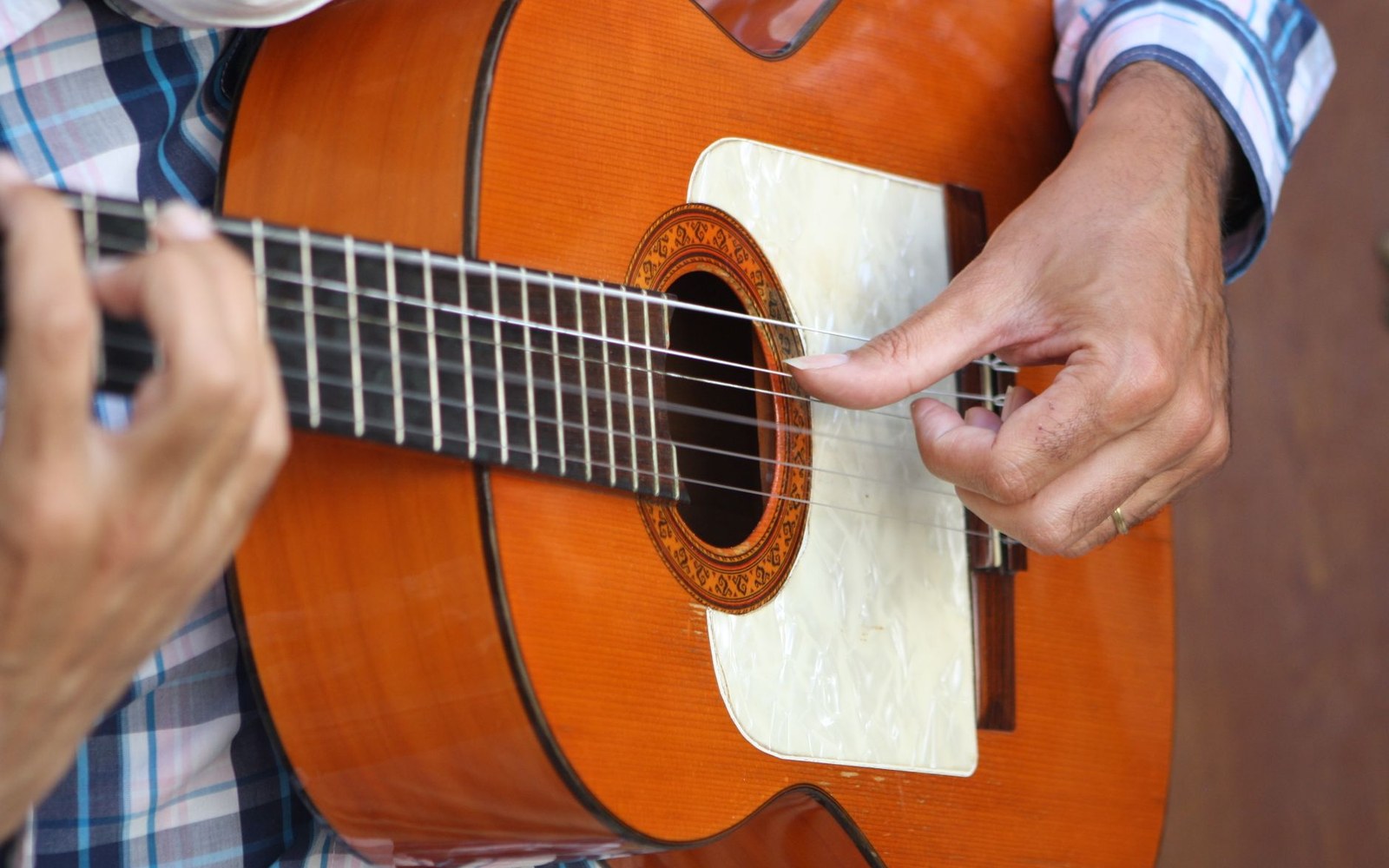
The rasgueado is a rhythm technique before it is a chord — the hand keeps the compás.
Photo: Elena / PexelsNueva canción — new song — is one of Latin American music's least mystified terms. It means exactly what it says: a wave of singer-songwriters, working from the late 1960s into the 1970s, who used acoustic guitar and vernacular folk forms to carry lyrics that the continent's military governments found dangerous enough to suppress.
The movement had no single origin point. In Chile, it crystallised around the Peña de los Parra, a cultural venue opened in Santiago in 1965 by siblings Isabel and Ángel Parra, where Víctor Jara began performing songs that drew on Chilean cueca and Andean tonadas while addressing landlessness, labour and the everyday lives of the poor. Jara's El derecho de vivir en paz (1971) is among the most documented recordings of the period — an album made during Salvador Allende's Popular Unity government, when state-funded cultural production briefly gave the movement institutional shelter. That shelter ended on 11 September 1973, when Augusto Pinochet's coup overthrew Allende; Jara was killed in the days that followed, a fact documented by the Chilean government's own Rettig Commission.
In Cuba, Silvio Rodríguez and Pablo Milanés developed a parallel strand — the Nueva Trova, or new ballad — under circumstances almost opposite to Chile's: a revolutionary government that sponsored their work through the Casa de las Américas cultural institution, while also policing the ideological edges of what they could say. Rodríguez's Días y Flores (1975) and Milanés's Yo No Te Pido (the same year) circulated across Latin America on cassette copies that bypassed the censorship regimes of Argentina, Uruguay and Chile, giving the music a clandestine geography.

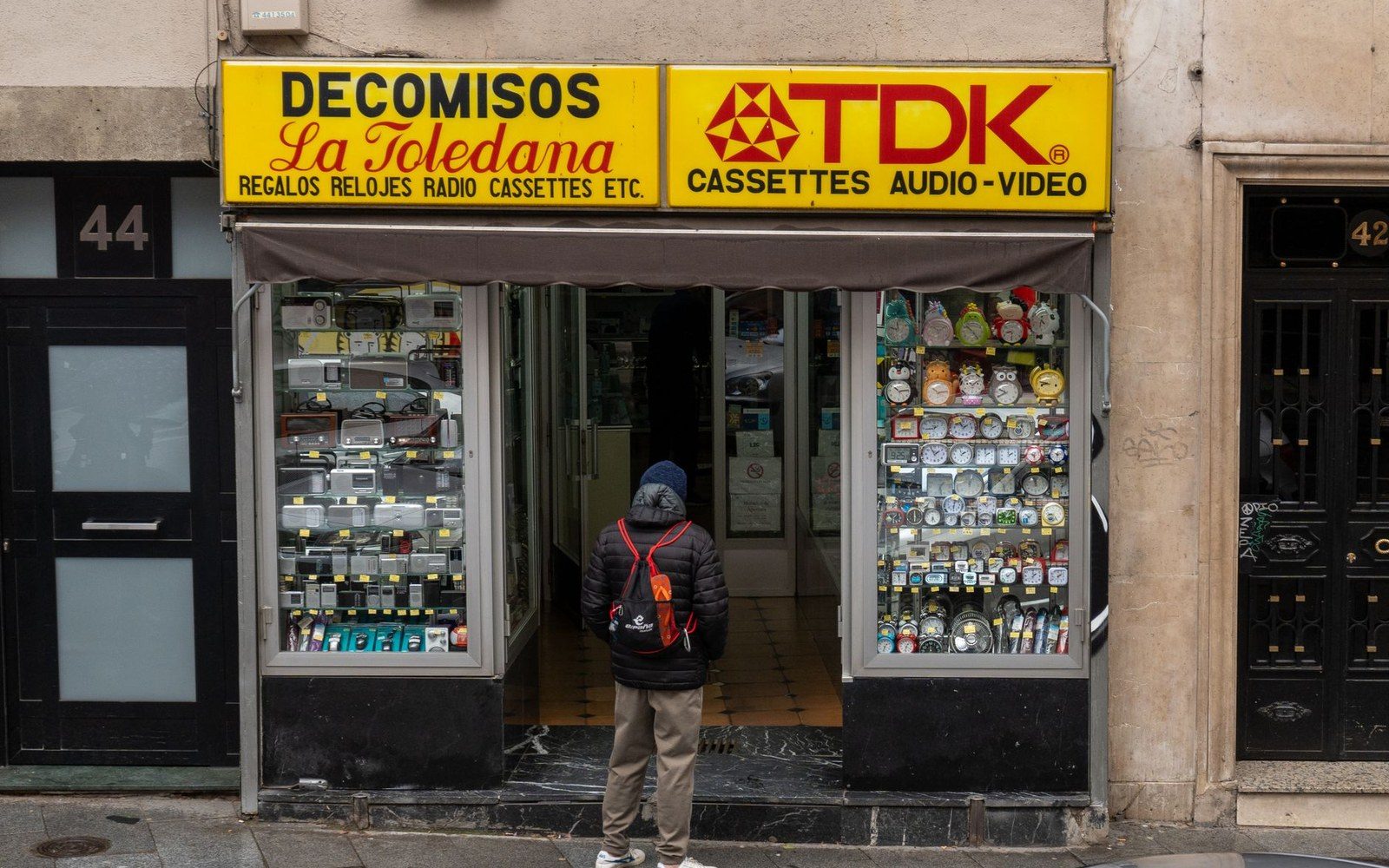
Physical racks still decide what a catalogue looks like in the country that pressed it.
Photo: Zeynep M. / PexelsArgentina had Mercedes Sosa, whose 1965 appearance at the Festival de Cosquín — a traditional folk festival in Córdoba province — is treated as a founding gesture of the Argentine nueva canción. Working within the folclore tradition, Sosa embedded political content inside musical forms that audiences already knew: zamba, chacarera, vidala. After the 1976 coup installed Jorge Rafael Videla, she was detained at a concert in La Plata, her audience arrested alongside her. She spent the early 1980s in exile in Europe. Her recordings from the period are held by the Biblioteca Nacional de Argentina, which has treated them as historical documents as much as musical ones.
The movement spread unevenly. In Uruguay, Daniel Viglietti and Los Olimareños operated under similar conditions. In Brazil, the roughly contemporaneous Música Popular Brasileira — tropicália and its aftermath — shared some political lineage but different sonic materials, and is usually discussed separately. Nueva canción reached Spain too, where under Franco its vocabulary resonated with the Catalan Nova Cançó and the Basque Ez Dok Amairu movements, both of which used regional-language song as a form of cultural resistance inside the dictatorship.
What united these strands was less a shared sound than a shared understanding of the instrument's function. The acoustic guitar in this context was not pastoral decoration; it was the cheapest, most portable, most easily hidden medium for a lyric that could not be broadcast or pressed in large quantities without state interference. Songs circulated as the nueva canción movement's primary distribution technology — in live performance, on copied tape, in clandestine print — years before the movement acquired the name scholars now give it.
Chronology
- 1965 — Peña de los Parra opens in Santiago; Mercedes Sosa performs at Festival de Cosquín
- 1971 — Víctor Jara records El derecho de vivir en paz under Allende's Popular Unity government
- 1973 — Pinochet coup; Jara killed; Chilean nueva canción enters exile
- 1975 — Silvio Rodríguez's Días y Flores and Pablo Milanés's Yo No Te Pido released in Cuba
- 1976 — Argentine coup under Videla
- Early 1980s — Sosa in European exile; cassette circulation sustains the repertoire across the continent
The category hardened retrospectively. Academic and industry designation arrived after the fact, once exile, death and the eventual return of democratic government created the conditions for reassessment. By the time the Latin Recording Academy began inscribing careers into its Latin Grammy Hall of Fame, nueva canción had become a periodising label as much as a living practice — a way of locating where politically conscious Spanish-language songwriting came from, before it dispersed into what came after.
Jorge Drexler, who studied medicine in Uruguay before building a career in Madrid, cites this lineage openly. Silvana Estrada's contemporary acoustic work in Mexico draws on the same relationship between voice, guitar and social witness. The movement no longer exists as a movement; its assumptions about what a song is for never entirely left.
Key movements and their contexts
- Chile / Peña de los Parra — institutional base until 1973 coup
- Cuba / Nueva Trova — state-sponsored but ideologically policed; Casa de las Américas as organising body
- Argentina / folclore nueva canción — embedded in zamba and chacarera forms; suppressed after 1976
- Spain / Nova Cançó and Ez Dok Amairu — parallel regional-language resistance under Franco