The Palos, the UNESCO Listing, and What Rosalía Did With Both
Flamenco was inscribed on UNESCO's Intangible Cultural Heritage list in 2010. Its named forms — soleá, bulerías, seguiriyas, alegrías — each carry a distinct compás. This piece identifies which palos appear in Rosalía's El Mal Querer (2018) and how their rhythmic structures were retained or broken.
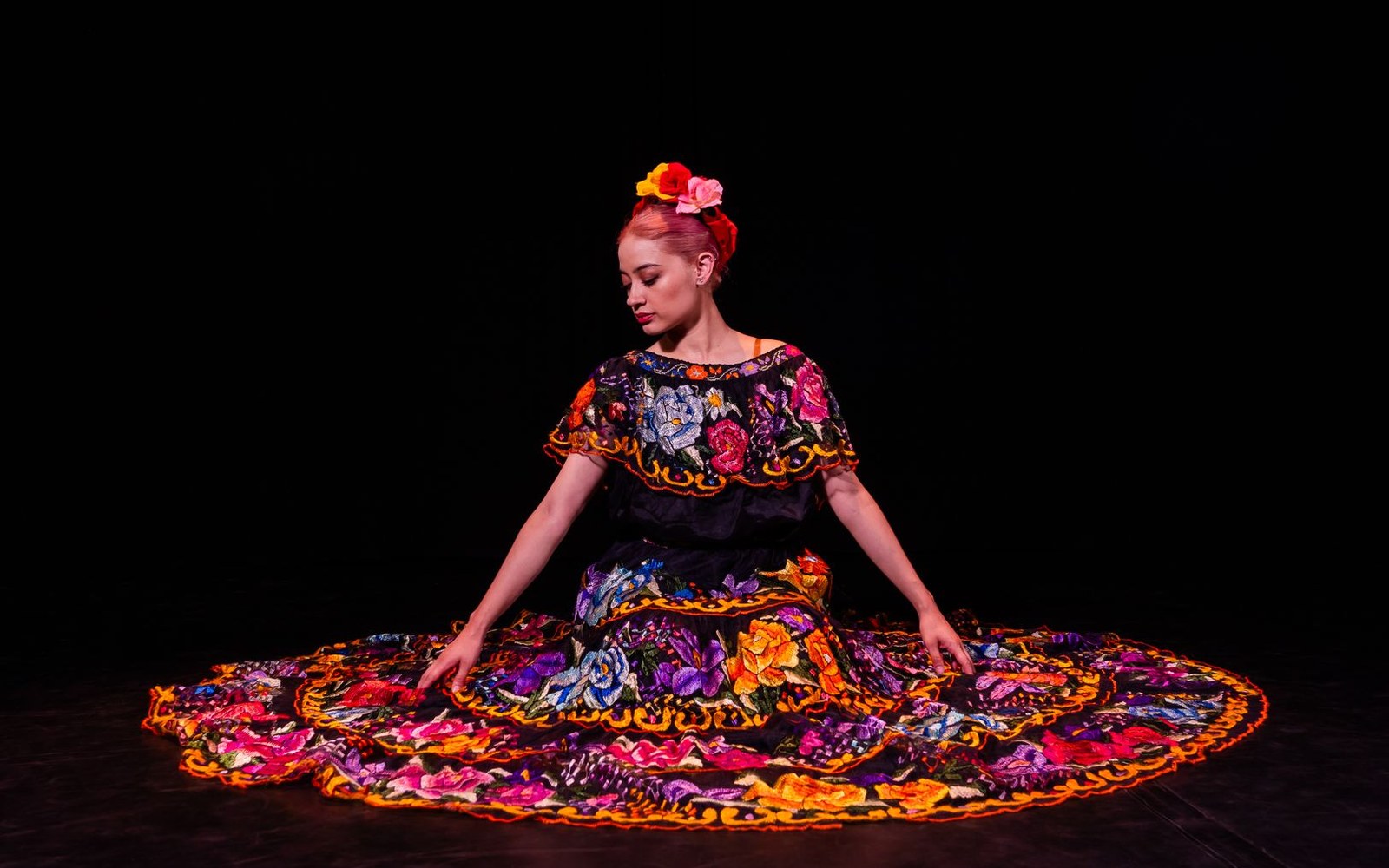
soleá — 12-beat compás, accents concentrated toward beats 10, 11, 12; considered a foundational form
Photo: Jimmy Elizarraras / PexelsFlamenco's formal architecture, and the moment it stopped being untouchable
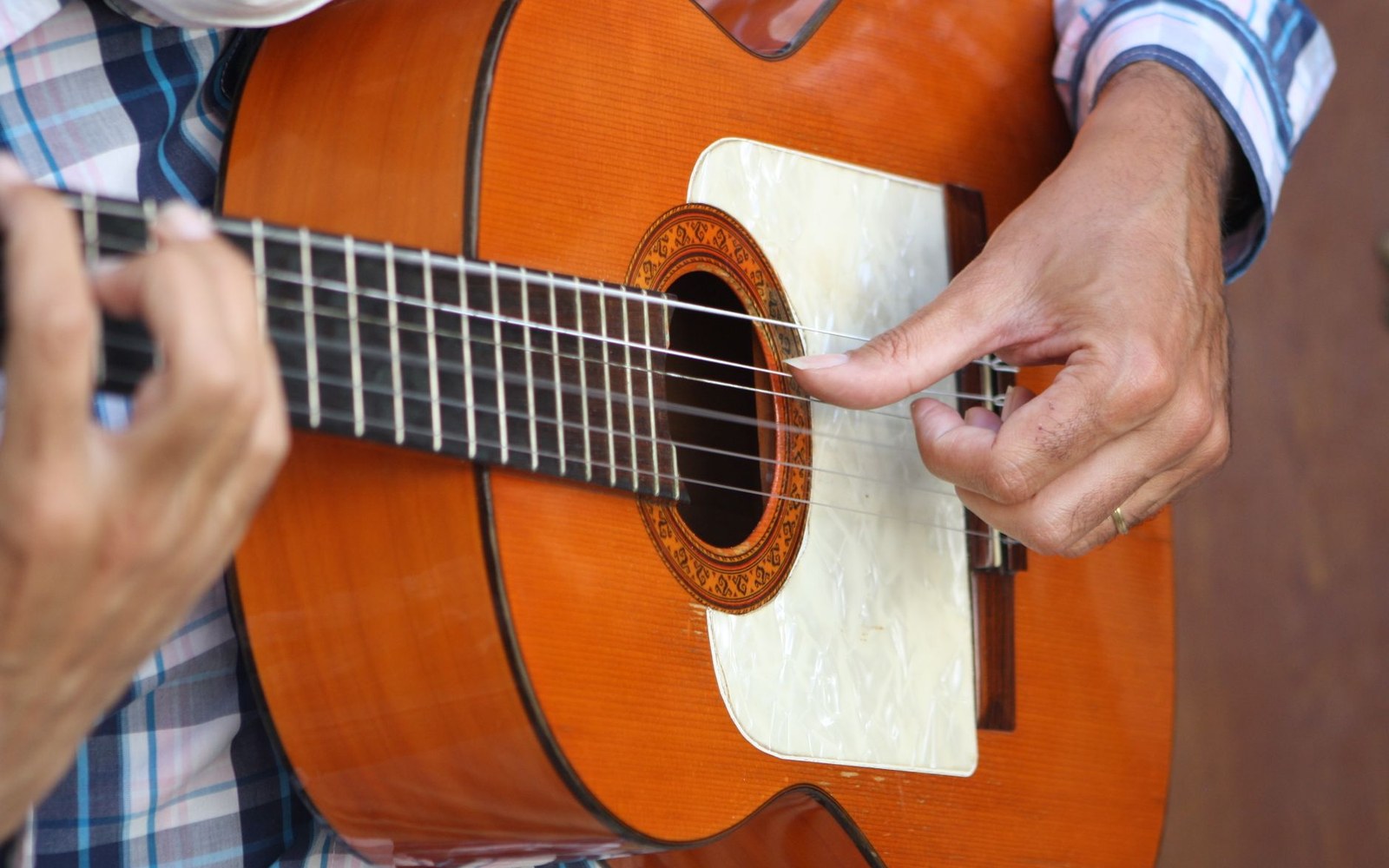
The rasgueado is a rhythm technique before it is a chord — the hand keeps the compás.
Photo: Elena / PexelsFlamenco was inscribed on UNESCO's Representative List of the Intangible Cultural Heritage of Humanity in 2010, the nomination submitted jointly by Spain's Ministry of Culture and a consortium of Andalusian regional bodies. The listing did not freeze the music. What it did was confirm that the world now had a framework for valuing something Spain had spent decades treating as both a national treasure and an embarrassment, simultaneously too regional and too tourist-facing to command serious institutional attention. The inscription acknowledged flamenco as a living practice — but it also introduced the kind of archival gaze that tends to make living things feel preserved.
Flamenco's internal architecture is built from the palos: the named rhythmic and modal forms, each with its own compás — the rhythmic cycle that governs when accents, handclaps and footwork fall. The soleá moves in a 12-beat cycle with accents clustering toward the end. The seguiriyas runs in a 12-beat cycle also, but with a different accent pattern that creates a profoundly different emotional gravity — angular, grief-heavy. Bulerías is the fast form, again 12 beats, but at a tempo where the accents seem to chase each other. Alegrías sits in a brighter 12-beat frame, associated with Cádiz. These are not interchangeable, and a trained ear reads them the way a classically trained musician reads time signatures — not as description but as instruction.
What El Mal Querer placed inside those structures
Rosalía's debut album, Los Ángeles (2017), was largely unaccompanied voice and guitar — a direct conversation with the Granadan cantaor tradition, produced alongside Raül Refree. El Mal Querer (2018), produced with El Guincho, moved into a different territory: electronic production, studio manipulation, contemporary vocal layering, and a concept album structure built around a 13th-century Occitan novel, Flamenca. The album is discussed in detail elsewhere on this site, but what matters here is the method rather than the reception.
Brass and requinto on a small stage: the format radio files as regional Mexican.
Photo: Caleb Oquendo / PexelsThe palos are present in El Mal Querer, but their deployment is selective and sometimes deliberately stressed. Bulerías — the fast, cyclical 12-beat form — appears most legibly in tracks where Rosalía's vocal phrasing follows the compás even as the instrumental bed around it refuses to. The effect is not a fusion in the pop-production sense, where a genre element is sampled and recontextualised until it becomes texture. The compás remains load-bearing: it is what the performance is measured against, whether or not it is being completed or interrupted.
The seguiriyas, the form most associated with deep or cante jondo — the oldest and most austere flamenco singing — appears in passages where the rhythmic structure is most obscured by production. This is a deliberate kind of pressure. In flamenco performance, the seguiriyas compás is already the form most tolerant of rhythmic displacement, most given to the singer pulling time. Rosalía's studio treatments amplify this tendency until the cycle is nearly inaudible, held together by the memory a listener carries of how the phrasing is supposed to resolve.
What El Mal Querer does not do is abandon the palos as a structural principle in favour of pop songwriting convention. The tracks do not resolve into choruses with the predictability of verse-chorus form. The record's logic remains cyclic — which is the logic of the compás — even where individual cycles are broken.
The palos in brief
- soleá — 12-beat compás, accents concentrated toward beats 10, 11, 12; considered a foundational form
- seguiriyas — 12-beat cycle, different accent pattern from soleá; associated with cante jondo, the deepest and oldest style
- bulerías — fast 12-beat form; the most rhythmically compressed of the major palos; appears most legibly in El Mal Querer
- alegrías — 12-beat, associated with Cádiz; brighter character than soleá or seguiriyas
- compás — the governing rhythmic cycle of each palo; not a time signature but a complete rhythmic and accentual system
The listing, the inheritance, the argument
The UNESCO inscription recognises flamenco as held by a community of practitioners, not by an institution, and explicitly includes its evolution as part of what is being protected. That framing — flamenco as alive and therefore changeable — is the one Rosalía's work inhabits without quite saying so. Camarón de la Isla and Paco de Lucía faced comparable resistance in the 1970s when they introduced jazz harmonics and rock instrumentation into the form; the terms of the argument were almost identical.
The disagreement over whether El Mal Querer extends flamenco or cannibalises it cannot be resolved by the UNESCO listing, whose criteria run to cultural continuity and community transmission rather than to aesthetic judgment. What it can confirm is that the compás — the central claim of the palos — remains the site of the dispute. Rosalía keeps it, stresses it, and sometimes fractures it. That is a flamenco argument, conducted in flamenco terms.
Key moment
- 2010 — Flamenco inscribed on UNESCO's Intangible Cultural Heritage list
- 2017 — Rosalía, Los Ángeles: voice-and-guitar debut, Granadan cantaor tradition
- 2018 — El Mal Querer (Sony Music): electronic production applied to palo structures; concept built on a 13th-century Occitan source text