Barcelona Has Two Festivals and They Are Not the Same Festival
Primavera Sound and Sónar both run in Barcelona and both book Latin acts, but their curatorial logics differ sharply — Primavera is a rock-rooted festival that expanded; Sónar is an electronic and experimental event. This piece profiles both using their documented 2023 lineups as the named examples.
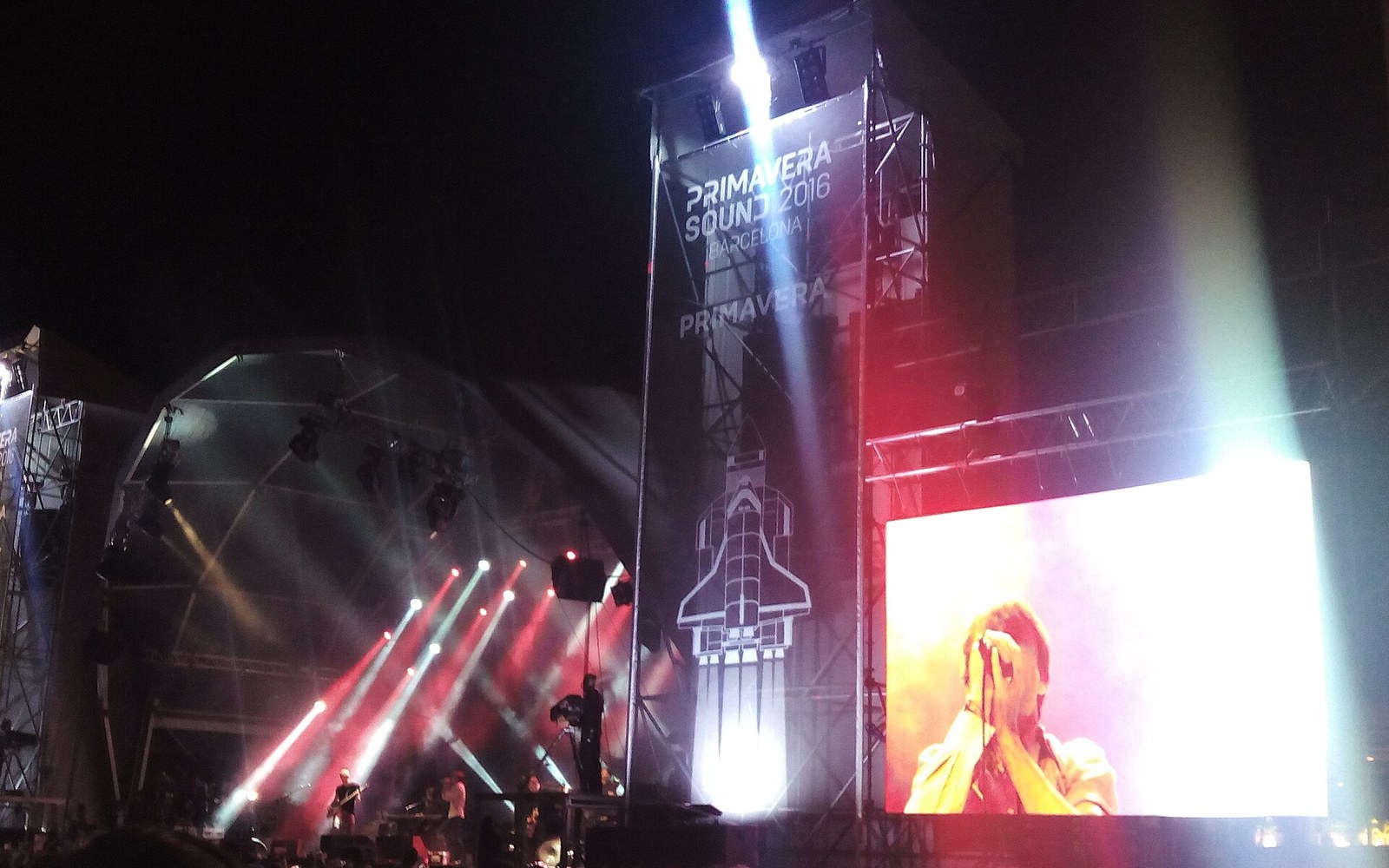
Primavera Sound — founded 2001; rock-rooted, now omnivore; main-stage Latin bookings integrated into general lineup
Photo: 20160601 Primavera Sound - Suede · Wikimedia Commons
Physical racks still decide what a catalogue looks like in the country that pressed it.
Photo: Zeynep M. / PexelsBoth Primavera Sound and Sónar run in Barcelona and both book Latin acts — the curatorial logic behind each could hardly be more different.
Same City, Different Argument
Primavera Sound began in 2001 with an identity shaped by Anglo-American indie and rock; Latin acts arrived later, as the festival grew into a genuinely global event. By 2023 its main stage was carrying names from across the urbano — Spanish-language urban pop — spectrum alongside guitar acts, electronic producers and legacy artists. The logic is curatorial omnivore: if it is significant music anywhere, it belongs here eventually. Rosalía, who has appeared at Primavera across multiple editions, is the clearest example of how that philosophy handles Spanish-language experimentalism — a flamenco-trained artist who reaches global pop audiences without softening the bulerías rhythms underneath.
Sónar is a different proposition entirely. Founded in Barcelona in 1994, it is structured explicitly around electronic music, digital art and what its organisers call advanced music — a category elastic enough to include club-oriented Latin production but that filters out straightforwardly commercial pop. The festival's own description positions it as a meeting point between creativity and technology. That framing means a reggaetón producer working in experimental sound design fits more naturally than a touring singer-songwriter, however celebrated.
A certification is a document before it is a decoration — each body counts units its own way.
Photo: cottonbro studio / Pexels2023, as Evidence
The 2023 Primavera Sound lineup in Barcelona, announced in late 2022, carried Kendrick Lamar and Depeche Mode at the top of the bill alongside Quevedo — the Canary Islands-born artist whose "Quevedo: Bzrp Music Sessions, Vol. 52" with Bizarrap became one of the most-streamed Spanish-language tracks of 2022 — and Feid, the Colombian urbano artist. The Latin presence was woven into a general lineup, not segregated onto a world-music stage.
Sónar 2023 took a different shape: Aphex Twin headlined a programme centred on electronic and club music, with Latin acts such as the Colombian, Berlin-based Lucrecia Dalt selected for their production credentials rather than their streaming numbers. The two events shared a city and a June calendar but almost no curatorial DNA.
That divergence matters for how the Latin music industry thinks about Europe. Primavera delivers reach — a huge general audience likely to discover an artist incidentally. Sónar delivers credibility within a specific creative conversation. Both are useful, but they are useful for different reasons, and a booking at one does not imply the other. Barcelona offers two festivals; artists and labels choose between them carefully.
Festival identity at a glance
- Primavera Sound — founded 2001; rock-rooted, now omnivore; main-stage Latin bookings integrated into general lineup
- Sónar — founded 1994; electronic and experimental; Latin bookings filtered by production credentials, not commercial profile
- Both run in Barcelona, both typically in June; neither is a Latin-specialist event