The Madrid Indie Scene and the C. Tangana Problem
C. Tangana's El Madrileño (Sony Music Spain, 2021) used copla, bolero and flamenco to make something that sat beside but refused to be Spanish indie. This piece maps the Madrid scene he emerged from — Aitana, Quevedo on its edges — and what the Premios Goya nomination for the record's film work meant.
El Madrileño — Sony Music Spain, released February 2021
Photo: Madrid - Edificio Grassy (Gran Vía 1) - north facade - relief over entrance · Wikimedia Commons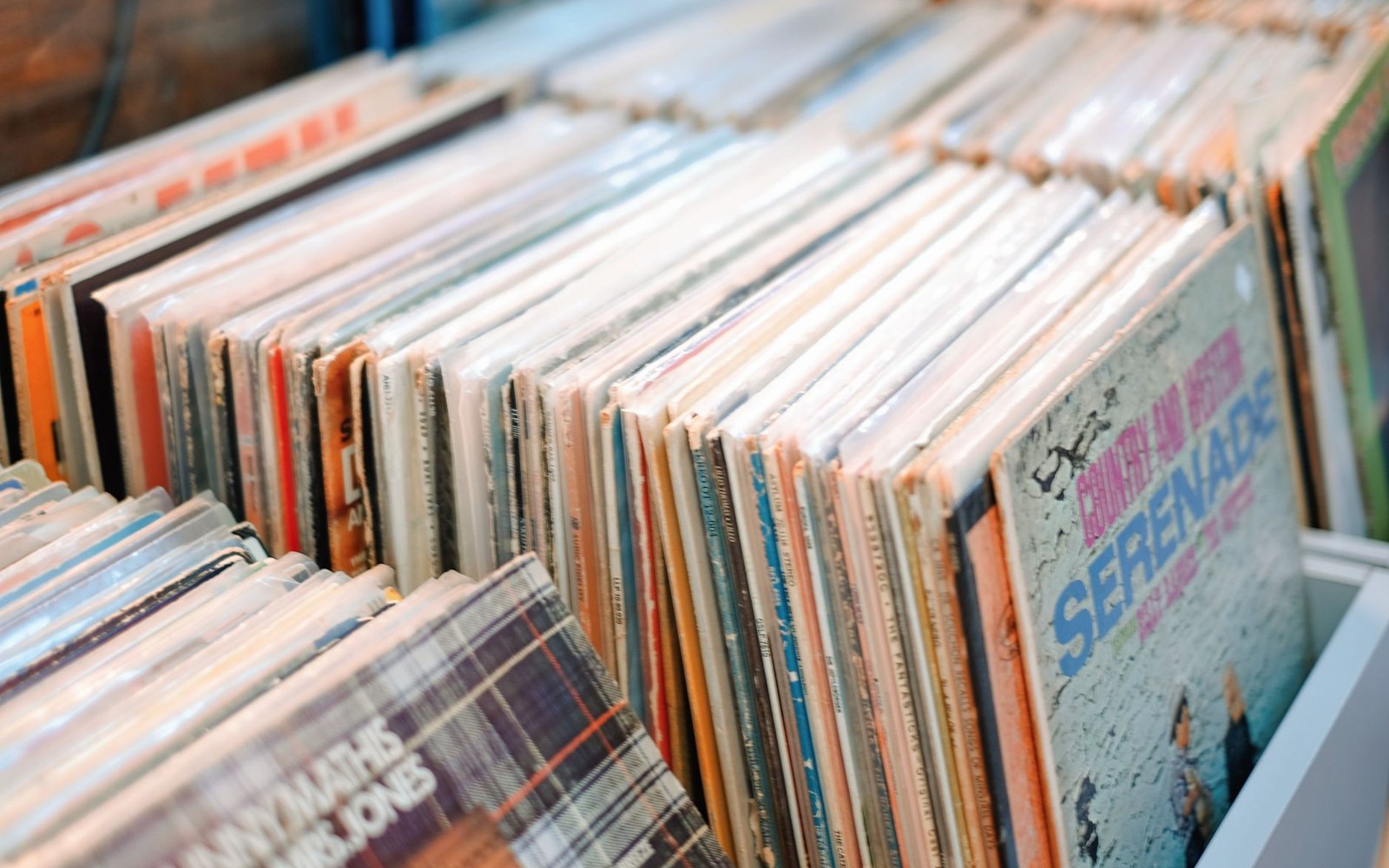
Physical racks still decide what a catalogue looks like in the country that pressed it.
Photo: Zeynep M. / PexelsEl Madrileño arrived in 2021 as something Madrid's indie world couldn't absorb and couldn't ignore.
A Scene and Its Discontents
C. Tangana — born Antón Álvarez Alfaro in Madrid in 1990 — spent his early career as a trap and urbano artist before El Madrileño (Sony Music Spain, 2021) repositioned him entirely. The album drew on copla (Spain's theatrical popular song tradition), bolero, and flamenco, recording with figures including Jorge Drexler and Omar Apollo. The resulting sound sat in deliberate friction with both the Spanish indie circuit and the Latin urbano market — too rooted in vernacular tradition for one, too artistically restless for the other.
Madrid's indie scene of the same period was broadly guitar-pop in sensibility, still orbiting the long wake of the Movida Madrileña, Spain's post-Franco cultural explosion of the late 1970s and early 1980s. Aitana, whose fanbase is enormous in Spain, operated at the pop end of the spectrum; Quevedo, born in Madrid and raised in Las Palmas and associated with the Spanish urbano wave, belonged to a different current altogether. Neither sat close to what Álvarez was building. El Madrileño was not indie, not pop, not urbano, and not revival flamenco — which made it genuinely hard to categorise, and commercially very successful precisely because of that.
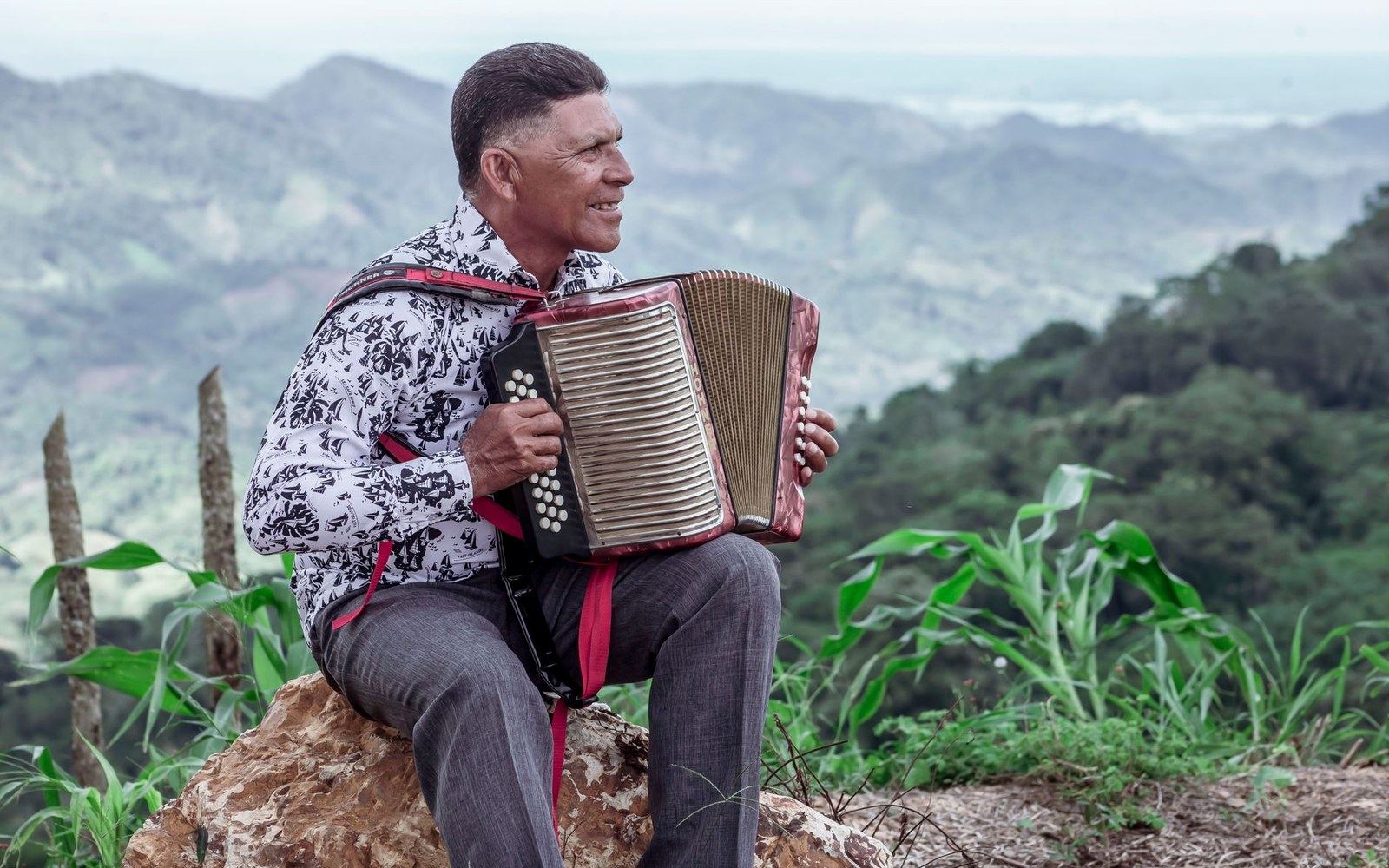
Accordion and bajo sexto — the two instruments that separate norteño from banda.
Photo: FRANK MERIÑO / PexelsThe album reached number one in Spain, certified by Promusicae, and produced multiple singles that charted across Latin America. That geographical spread was itself unusual for a record so explicitly rooted in Madrid and in Castilian vernacular forms — copla, the bolero of the mid-century Spanish café, the guitar vocabulary that connects to but does not replicate Andalusian flamenco.
What elevated the project further into the cultural conversation was the visual work surrounding it. The long-form documentary short El Madrileño and its associated music videos, created for the project, received a Goya Award nomination — Spain's equivalent of the Academy Awards, administered by the Academia de las Artes y las Ciencias Cinematográficas de España. That recognition moved the album into film-industry territory, a crossover that Spanish indie records rarely achieve and that underlined how deliberately Álvarez had constructed El Madrileño as a unified aesthetic object rather than a release cycle.
The record did not resolve any tension between commercial Spanish music and the indie tradition — it sharpened the question of what that tradition is even for, in a moment when the most interesting Spanish-language music was arriving from Puerto Rico, Colombia, and Sinaloa rather than from Madrid's guitar circuit.
Key facts and figures
- El Madrileño — Sony Music Spain, released February 2021
- Number one in Spain, certified by Promusicae
- Goya Award nomination for associated film/visual work, awarded by the Academia de las Artes y las Ciencias Cinematográficas de España